
Biology · chapter PYQs
Morphology of Flowering Plants, on the exam screen.
10 questions from NEET 2026, Re-NEET 2026, NEET 2020, 10 minutes, marked +4 / −1. See them with solutions.
Morphology of Flowering Plants · PYQs
Candidate: You
Time Left
Q1/10
In angiosperms, root hairs arise from which one of the following regions of the root?
Answer and explanation
Answer: (4)
Root hairs are fine, thread-like unicellular outgrowths of epidermal cells that develop in the region of maturation (differentiation), where cells have fully elongated and differentiated. Hence option (4) is correct. The root cap, meristematic zone and elongation zone lie nearer the root tip than this region and do not bear root hairs.
Which of the following floral formula is the correct floral formula of the Solanaceae family?
Answer and explanation
Answer: (2)
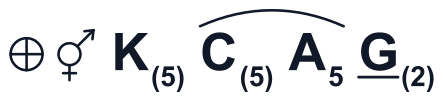
Solanaceae flowers are actinomorphic (⊕) and bisexual (⚥) with a gamosepalous calyx K(5), a gamopetalous corolla C(5), five epipetalous stamens A5 (the arc linking corolla to androecium shows stamens attached to the corolla) and a bicarpellary, syncarpous, superior ovary G(2). Only option (2) shows both the fused calyx/corolla and the epipetalous condition, so it is the correct floral formula.
In racemose inflorescence, _________.
Answer and explanation
Answer: (4)
In a racemose inflorescence the main axis keeps growing (unlimited growth) and does not end in a flower; the flowers are borne laterally in acropetal succession, with older flowers at the base and younger ones toward the tip. Termination of the main axis in a flower and limited growth are features of the cymose inflorescence.
Match List I with List II :
List I (Placentation)
List II (Example)
P) Marginal
I) Mustard
Q) Axile
II) Pea
R) Parietal
III) Marigold
S) Basal
IV) Lemon
Choose the correct answer from the options given below:
Answer and explanation
Answer: (1)
Marginal placentation is seen in pea (P-II), axile in lemon/citrus (Q-IV), parietal in mustard (R-I), and basal in marigold (S-III). This yields P-II, Q-IV, R-I, S-III.
Phyllotaxy is the pattern of arrangement of ________.
Answer and explanation
Answer: (1)
Phyllotaxy is the arrangement of LEAVES on the stem or branch, and it comes in three patterns: alternate (as in china rose), opposite (as in Calotropis) and whorled (as in Alstonia). The Greek root phyllon means leaf. The arrangement of flowers on the floral axis is called inflorescence, a separate term. NCERT Class 11, Morphology of Flowering Plants.
Which of the following are characteristic features of Solanaceae family?
Statement I: Flowers are bisexual and actinomorphic
Statement II: Calyx have five sepals and are united
Statement III: Androecium have five stamens and are epipetalous
Statement IV: Ovary is inferior
Choose the correct answer from the options given below :Answer and explanation
Answer: (1)
The Solanaceae floral formula describes bisexual, actinomorphic flowers with a gamosepalous calyx of five united sepals, a gamopetalous corolla of five petals, and five epipetalous stamens attached to the corolla tube. Statement IV is the odd one out: the ovary in this family is bicarpellary, syncarpous and SUPERIOR, seated above the other floral parts. NCERT Class 11, Morphology of Flowering Plants.
Match List-I with List-II.
List I
List II
P) Marginal placentation
I) Argemone
Q) Axile placentation
II) Tomato
R) Parietal placentation
III) Primrose
S) Free central placentation
IV) Pea
Choose the correct answer from the options given below :
Answer and explanation
Answer: (4)
Placentation describes where ovules attach inside the ovary. Marginal placentation has a single ridge along the ventral suture of a monocarpellary ovary, as in pea (P-IV). Axile placentation occurs in multilocular ovaries where the placenta is axial, as in tomato (Q-II). Parietal placentation puts the ovules on the inner ovary wall of a one-chambered ovary, as in Argemone (R-I). Free central placentation has ovules on a central axis with no septa, as in primrose (S-III). NCERT Class 11, Morphology of Flowering Plants.
The roots that originate from the base of the stem are
Answer and explanation
Answer: (4)
Roots arising in clusters from the base of the stem replace the short-lived primary root and form a fibrous root system, as in grasses. Chapter: Morphology of Flowering Plants.
Ray florets have
Answer and explanation
Answer: (4)
Ray florets of Asteraceae are epigynous; the other floral whorls arise above the ovary, so the ovary is inferior. Chapter: Morphology of Flowering Plants.
The ovary is half inferior in :
Answer and explanation
Answer: (3)
Plum has a perigynous flower and a half-inferior ovary. Mustard, sunflower and brinjal have superior or inferior ovaries rather than the half-inferior condition asked here. Chapter: Morphology of Flowering Plants.
Your result
0 / 40
Keep practising with NEET PYQs, review explanations and track your chapter accuracy in the app. Free until the 2027 exam.